제품 설명
CHINAMFG rollers enhance rotation on the bushing while reducing impact loads on the sprocket tooth during operation.
All components are heat treated to achieve maximum strength.
Pre-loaded during the manufacturing process to minimize initial elongation.
Hot dipped lubrication ensures 100% lubrication of all chain components to extend wear life and reduce maintenance costs.
| CHAIN NO. |
PITCH | BUSH WIDTH |
ROLLER DIA |
PIN | PLATE | DIMENSION OF ATTACHMENT | MIN. TENSILE STRENGTH |
|||||
| 디 | 엘 | 시간 | 티 | |||||||||
| mm | mm | mm | mm | mm | mm | mm | 시간 | 디3 | E | 에프 | kgf | |
| NSE200 | 100.00 | 51.80 | 44.50 | 19.10 | 111.50 | 60.00 | 10.00 | 150.00 | 18.00 | 100.00 | 105.00 | 420 |
| NSE300 | 100.00 | 57.60 | 48.50 | 22.23 | 120.00 | 75.00 | 7.50 | 150.00 | 18.00 | 100.00 | 105.00 | 520 |
| NSE400 | 125.00 | 67.40 | 63.50 | 31.75 | 139.30 | 90.00 | 12.00 | 180.00 | 18.00 | 125.00 | 130.00 | 735 |
| NSE500-1 | 125.00 | 75.00 | 70.00 | 35.00 | 170.00 | 100.00 | 16.00 | 180.00 | 18.00 | 125.00 | 130.00 | 980 |
| NSE500-2 | 125.00 | 75.00 | 71.50 | 36.00 | 165.00 | 102.00 | 16.00 | 180.00 | 18.00 | 125.00 | 130.00 | 1200 |
| NSE600H | 125.00 | 75.00 | 75.00 | 40.00 | 165.00 | 105.00 | 16.00 | 185.00 | 18.00 | 125.00 | 136.00 | 1260 |
| NSE700 | 150.00 | 85.00 | 85.00 | 48.00 | 180.00 | 125.00 | 16.00 | 226.00 | 22.00 | 150.00 | 165.00 | 1470 |
| 용법: | Transmission Chain, Conveyor Chain, Dedicated Special Chain |
|---|---|
| 재료: | 합금/탄소강 |
| 표면 처리: | 세련 |
| 특징: | 내열성 |
| 체인 크기: | 2 3/4"*3" |
| 구조: | 롤러 체인 |
| 샘플: |
US$ 10/미터
1미터(최소 주문) | |
|---|
| 사용자 정의: |
사용 가능
| 맞춤형 요청 |
|---|

부식 방지 컨베이어 체인을 선택할 때 고려해야 할 사항은 무엇입니까?
부식 방지 컨베이어 체인을 선택할 때는 부식성 환경에서 최적의 성능과 수명을 보장하기 위해 몇 가지 사항을 고려해야 합니다. 고려해야 할 주요 요소는 다음과 같습니다.
– 재료 선택:
환경에 존재하는 특정 부식성 물질에 대한 내성이 있는 컨베이어 체인 소재를 선택하십시오. 스테인리스 스틸, 플라스틱, 그리고 아연이나 니켈 도금과 같은 특수 코팅이 일반적으로 내식성 때문에 사용됩니다.
– 내식성 등급:
다양한 체인 소재와 코팅의 내식성 등급을 검토하십시오. ASTM이나 ISO와 같은 산업 표준을 참고하여 특정 부식성 물질이나 환경 조건에 대한 소재의 내성을 확인하십시오.
– 환경적 요인:
습도, 온도, 화학 물질이나 용매의 존재, 염수나 산에 노출 등 부식에 영향을 미치는 특정 환경 요인을 고려하십시오. 이러한 요인이 체인의 내식성 요건에 어떤 영향을 미칠 수 있는지 평가하십시오.
– 코팅 또는 표면 처리:
금속 체인을 사용하는 경우, 내식성을 강화하기 위해 추가 코팅이나 표면 처리를 고려하세요. 전기 도금, 분체 도장 또는 특수 부식 방지 코팅을 사용할 수 있습니다.
– 세척 방법과의 호환성:
선택한 체인 소재가 해당 용도에 사용되는 세척 방법 및 화학 물질과 호환되는지 확인하십시오. 일부 내식성 소재는 성능과 수명을 유지하기 위해 특정 세척 절차가 필요할 수 있습니다.
– 운영 고려 사항:
컨베이어 시스템의 하중 용량, 속도 및 운영 요건을 고려하십시오. 내식성 체인이 내식성을 손상시키지 않으면서 기계적 응력과 운영 요건을 견딜 수 있는지 확인하십시오.
– 비용 효율성:
부식 방지 컨베이어 체인을 사용할 경우 초기 비용과 장기적인 이점을 신중하게 고려해야 합니다. 부식 방지 소재는 초기 비용이 높을 수 있지만, 부식으로 인한 고장으로 인한 유지 보수, 교체 및 가동 중단 비용을 크게 줄일 수 있습니다.
이러한 요소를 고려하면 특정 부식 환경에 적합한 내식성 컨베이어 체인을 선택할 수 있으며, 화학 처리, 식품 생산, 폐수 처리 또는 야외 환경과 같은 응용 분야에서 안정적이고 내구성 있는 성능을 보장할 수 있습니다.
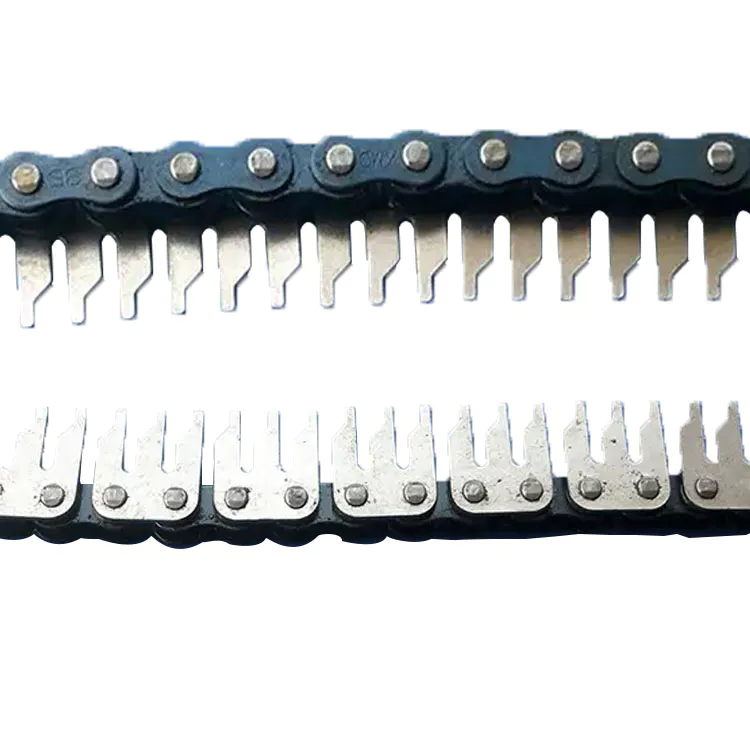
What are the advantages of using a plastic conveyor chain?
Plastic conveyor chains offer several advantages over traditional metal chains. Here are some of the key advantages:
1. Corrosion Resistance: Plastic chains are highly resistant to corrosion, making them ideal for applications in humid or corrosive environments. They do not rust or deteriorate when exposed to moisture or chemicals.
2. Lightweight: Plastic chains are significantly lighter than metal chains, making them easier to handle and install. Their lightweight nature reduces the overall weight of the conveyor system and can result in energy savings during operation.
3. Low Noise Operation: Plastic chains generate less noise compared to metal chains, leading to a quieter working environment. This can be particularly beneficial in industries where noise reduction is important, such as food processing or packaging.
4. Reduced Friction and Wear: Plastic chains have self-lubricating properties, which reduce friction and wear. This results in lower maintenance requirements and longer chain life. The smooth surface of plastic chains also minimizes the risk of product damage during transportation.
5. Flexibility and Modularity: Plastic chains can be easily customized and designed to fit specific conveyor system requirements. They offer flexibility in terms of length, width, and configuration. Additionally, plastic chains are often modular, allowing for easy replacement of damaged or worn-out sections without replacing the entire chain.
6. Cost-Effective: Plastic conveyor chains are generally more cost-effective compared to metal chains. They are often less expensive to manufacture and offer a longer lifespan with minimal maintenance requirements, resulting in lower overall costs.
7. Chemical Resistance: Plastic chains are resistant to a wide range of chemicals, making them suitable for applications where exposure to aggressive substances is a concern. They can withstand contact with oils, acids, alkalis, and various cleaning agents.
Overall, the advantages of using a plastic conveyor chain include corrosion resistance, lightweight design, low noise operation, reduced friction and wear, flexibility, cost-effectiveness, and chemical resistance. These benefits make plastic chains a popular choice in various industries, including food processing, packaging, pharmaceuticals, and logistics.
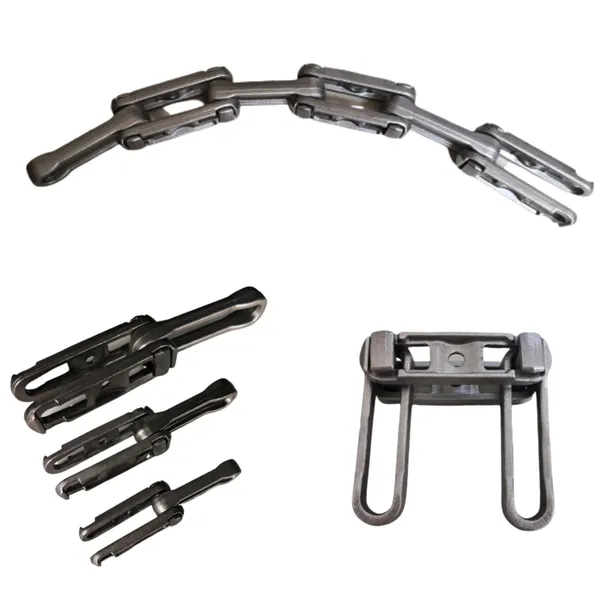
What are the signs of wear and tear in a conveyor chain?
Over time, a conveyor chain may experience wear and tear due to the demanding nature of material handling operations. Several signs indicate the need for maintenance or replacement of a conveyor chain. These signs of wear and tear include:
- Chain Elongation: One of the common signs of wear in a conveyor chain is elongation. As the chain wears, the pitch between the chain links gradually increases, resulting in a longer chain length. Excessive elongation can cause improper engagement with sprockets, leading to slippage or chain derailment.
- Chain Link Plate Wear: The link plates of a conveyor chain can experience wear on their surfaces. This wear is typically caused by friction against sprockets, guide rails, or other components. Signs of plate wear include thinning or deformation of the link plates, which can affect the overall strength and integrity of the chain.
- Sprocket Tooth Wear: The teeth of the sprockets that engage with the conveyor chain can also exhibit signs of wear. Over time, the teeth may become worn down, rounded, or have irregular shapes. This wear can cause improper chain engagement, resulting in reduced efficiency and potential chain slipping or skipping.
- Excessive Noise: Increased noise during the operation of the conveyor system can indicate wear and tear in the chain. Excessive wear can lead to metal-to-metal contact, resulting in noisy operation. Unusual squeaking, grinding, or rattling sounds are indicators that the chain may require inspection or maintenance.
- Visible Damage: Any visible damage to the chain, such as cracked or broken link plates, bent pins, or missing attachments, is a clear sign of wear and tear. These damages compromise the chain’s structural integrity and should be addressed promptly to prevent further issues or chain failure.
- Inconsistent Movement: If the conveyor chain starts to exhibit jerky or uneven movement, it may be a sign of wear or misalignment. Misalignment can occur due to worn chain links, damaged sprockets, or improper tensioning. Inconsistent movement can lead to reduced efficiency, increased wear, and potential chain failure.
Regular inspection and maintenance of the conveyor chain system are essential to identify these signs of wear and tear. Timely replacement of worn components and proper lubrication can help prolong the life of the chain and maintain efficient operation.


editor by CX 2023-10-19